Showing posts with label Chinese. Show all posts

Monday, 6 February 2012

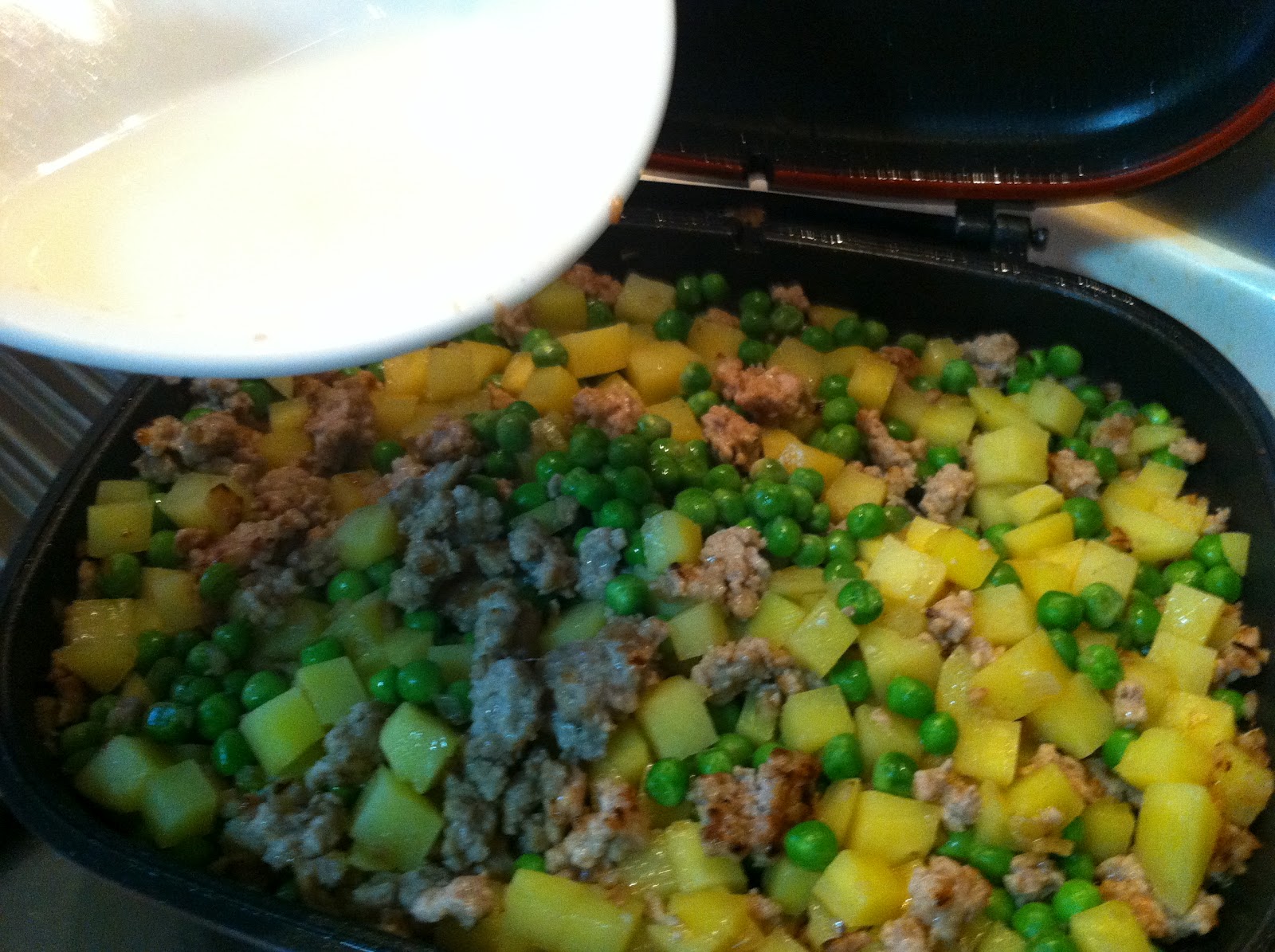
Happy Call Pan Diced Potatoes and Peas with Minced Pork


A simple dish to be eaten with rice, this dish is so easy to do with the HCP!

Ingredients:

2 potatoes, diced
100g minced pork, marinated with light soya sauce, cornflour, pepper, and sesame oil (about 1 tsp each, or to taste)
1/2 an onion, chopped
Frozen green peas
1 tbl cornflour + 1/4 cup cool water
Pepper and Salt to taste

Method:
1. Into the pan goes the potato with a bit of oil. Then lower the heat to have it bake/cook until half done.

2. Once the potato is done, remove it from the pan and fry the onion. I closed the pan to sweat the onions a bit before stirring it around.

3. And then, the minced pork which has been marinated with light soya sauce, some cornflour, pepper and sesame oil goes in to be fried. I added a bit of cooking oil to break up the minced pork.

4. Once the meat is in this stage, in goes the potato and peas to be cooked until the potatoes are done. Do add in a little water to create a steamy environment for the ingredients to incorporate. Also, add in pepper and salt to taste.

5. Once the potatoes are soft enough, add in a mix of cornflour and water, and stir it up to thicken the dish.

Done! :)


6. Serve with rice.

Monday, 23 January 2012

Konnyaku Fish

年年有余!

Happy Lunar New Year!

It's the first day of Chinese New Year today, and like all Chinese festive days, it's a day marked with great emphasis on family, well-wishes, traditions and practices.  Naturally, a great festive day cannot go without food - and CNY foods are always given wonderful names of blessings.

In Chinese, one of the food items that cannot be left out of the banquet table is the fish, for 'fish' in Chinese sounds like 'Abundance' (Yu).  The Southern Chinese eat a dish called Yu Sheng, which is raw fish salad, because it sounds like "abundance increase".  A New Year greeting, "年年有余" (nian nian you yu) means "Every year, there's abundance", but at the same time, it sounds like "Every year, there's fish".

Today's dessert is wonderfully simple to make - 15 mins tops, plus an hour to set - and is a perfect end to any CNY feast. ;)  I first had it when my brother's girlfriend served it at our family Reunion Dinner.  Since then, I've made 3 batches of this for CNY dinners. ;)  You can also make this to serve your guests when they come a-visiting. :)

Ingredients:
1 sachet/packet, plain Konnyaku Powder - gather the ingredients following the instructions on the packet for making the required amount of jelly for the mould you have
2 to 3 tsp* Sweet Osmanthus Flower aka 桂花 (Gui Hua) - easily obtained from any Chinese Medicine shop
1 to 2 tbsp* Wolfberry aka Goji berry aka 枸杞 - also easily obtained from any Chinese Medicine shop
Fish Jelly Mould

*depends on the amount of water in the Konnyaku Powder indicated on the packet.  Generally, about 1 teaspoon of Osmanthus flower for about 180-250ml of water.  If you'd like less speckled fishes, add less.  As for wolfberries, I estimate based on number of fish moulds I have... see Method step 4. ;)

Method:

  1. Steep the Osmanthus Flower and Wolfberry into the required amount of hot water for about a minute and then strain the flowers and berries out.  The water is then used to boil in a saucepan for making the Konnyaku jelly.  Do not throw the flowers and berries out though - you'll need them for the jelly later.
  2. Prepare the jelly according to the packet's instruction.  In place of water, you'll have to use the water you strained from the flowers and berries.  Follow the amount of sugar instructed by your jelly packet.
  3. When jelly is almost ready, put the flowers and berries back into the saucepan and give it a stir to mix it all in.
  4. Ladle out the berries and flowers into the fish mould.  I'll count out the berries in each mould to be  2 (if the mould is very small) because 2 is an even number and the Chinese believe that 'good things come in pairs'... also because it sounds like 'easy'; 6 because 6 sounds like 'prosperity'; 8 because 8 sounds like 'to prosper'; or 10 because 10 connotes completion to the Chinese.  I'll be careful to have even numbers because odd numbers are considered unlucky, and 4, which sounds like 'death' is also avoided.
  5. Allow the jelly to cool for a few minutes before putting it in the fridge to set.  Konnyaku jelly sets very fast, and would be ready in about an hour's time.
  6. Remove from mould and serve the fish in pairs... again, the whole idea of even numbers.
I hope you'll try this dessert soon, because not only is it easy to make, sounds good, it's also good for the body too.  The Osmanthus has a light peachy fragrance, and is suppose to be good for the skin, aids digestion, and has a calming effect on the consumer.  Wolfberries are good for the eyes and boost the immune system... and Konnyaku is a high in fiber, aids digestion and apparently has the ability to clean toxins in the intestines.  Therefore, it's the perfect food for the CNY festivities!

Here's wishing everyone a blessed, healthful New Year! :)

Tuesday, 26 October 2010

Chicken Porridge


We usually have Chicken Porridge for our Sunday lunch, because it's just so simple to make.
All the ingredients go into the Thermal Pot in the morning before we walk 5 minutes to church. After church, we simply walk home to a piping hot meal of Chicken Porridge.

CHICKEN PORRIDGE
INGREDIENTS
2 Chicken Legs, bone in
1 tbsp Cooking oil
2 cups Rice
1 litre Hot Water
5 slices Ginger
Salt to taste (about 1 tsp - we can always add light soy sauce later if the porridge isn't salty enough)
Fried Shallots, Sesame oil, White ground pepper and Spring onions for garnishing

METHOD
  1. Wash the rice, drain it and put it into the inner pot. Put the salt and cooking oil into the damp rice and shake it about to coat it. My granny swears by this method to get a very smooth congee. ;)
  2. Into the pot, add the chicken, the ginger slices and the hot water, and set it all to boil. I usually boil the water in my electric kettle to save on boiling water on the stove; it's quicker for me, especially when I'm trying to get 3 kids ready to get out of the house. If you don't have hot water, just simply add water into the pot and then boil it with the other ingredients.
  3. After vigorous boiling for a minimum of 5 minutes, turn off the heat and put the inner pot into the Thermal Pot.
  4. Go out. Have fun. Go online. Watch grass grow.
  5. After about 2 hours or more, remove the chicken from the pot and shred the meat. BE CAREFUL! IT'S STILL VERY, VERY HOT!
  6. Pour more hot water into the pot to get the consistency you prefer. Since my kids like their porridge thick, I usually scoop their out first. I love my porridge thin, so I'll add more water into the pot after I've distributed the porridge out into bowls.
  7. Put the shredded chicken on top of the porridge and garnish with fried shallots, sesame oil, white ground pepper and spring onions.
  8. Serve with you tiao if you can find it. ;)
I like my porridge with egg, so before ladling it out to my bowl, I crack an egg and put it in the bottom of the bowl. I make sure that the porridge is HOT before ladling it on the egg. The heat from the porridge will cook the egg, thickening the porridge to a yummy texture.

Monday, 3 May 2010

Chinese Apple Soup


Edna has been suffering from coughs for the past 5 days, and the poor dear has been miserable through the night, waking up to cough. Therefore, I was happy to find this Chinese Apple soup recipe, because apparently the soup is cooling and good for dealing with phlegms.

I found this recipe here, but I've modified it with another Apple soup recipe I found online sometime ago.

Ingredients:
2 large Fuji apples (remove core, then cut into 8 pieces each)
1 onion, cut into quarters
200g soft pork bones
10g sweet almonds (南杏)
5g bitter almonds(北杏)
8 dried dates, with seeds removed
3 fig fruits (无花果)
1.5L water
Salt (to taste, but optional)

Method:
1. Blanch the pork bones over boiling water and set it.
2. Rinse the dates, figs and sweet and bitter almonds and set them aside.
3. Put water (I usually boil my water in an electric kettle to save using the gas) in a thermal cooking pot, with all the ingredients listed. Bring the water to boil for about 10 minutes.
4. Put the thermal pot into the outer pot and keep it there for at least 2 hours.
5. Add salt to taste. Serve.


The soup is refreshing to taste. Light and sweet with a sourish, salty tinge. I haven't tried this, but apparently you could half the number of apples and replace it with Chinese Pears (those yellow ones), or even replace the apples with pears if the pears are in season.

What makes this soup good for cough is the following:
(Source: The World of Nourishing and Fine Soups by Kenny Chen)
  • Sweet almonds (南杏) : It tastes sweet and is neutral in nature. It is non-toxic and relieves cough.
  • Bitter almonds (北杏): It carries a slight trace of toxins but heals cough and expels phlegm.
  • Fig fruits (无花果): It clears heat and phlegm, nourishes the lungs and aids digestion with its high fibre content.
I wrote the Chinese names down and went to the nearby Chinese Medicine shop and bought 50g of each of the above. It came to S$3 only. There was enough ingredients to make another batch of this soup, for the amount of figs; but there was still so much of the almonds for a few batches. =)

The next time I make my Chinese Watercress Soup, I'll add the almonds - especially if my little ones have the coughs. =)

Tuesday, 10 July 2007

Baked Teriyaki Chicken

Delicious over rice, this baked Teriyaki Chicken is quite simple to make.

Terikayi Chicken
Ingredients:
1 pieces of Chicken thighs (Or any other meaty parts, or boneless parts if you like)

Marinate:
1 tbsp dark soya sauce
1 tsp light soya sauce
1 tsp Chinese cooking wine
1 tbsp sugar
1 tbsp cooking oil

Teriyaki Sauce:
3 tbsp mirin
1 1/2 tbsp Kikkoman sauce
2 tbsp Japanese sake
1 or 1 1/2 tbsp sugar (depending on how sweet you want)
50 ml of water

Method:
1. Marinate the chicken with the marinate ingredients for at least an hour. It's best if it's marinated overnight.
2. Bake the chicken on a wire rack in the oven set at 200 deg C, for about 10 minutes on each side. Use the leftover marinate to baste the chicken while baking.
3. While chicken is being baked, put all the ingredients for the Teriyaki Sauce into a frying pan and allow the mixture to simmer. Once the sauce thickens to your liking and taste, put the sauce aside.
4. Arrange the baked chicken pieces on a plate and pour the Teriyaki Sauce over the chicken. Serve hot with rice.

Watercress And Honey Agar-Agar


I had a glass of Watercress and Honey drink for the first time in a restaurant that specialised in Macau food. For the first time ever, I dawned on me that watercress, a veggie that almost only appeared in a savoury soup, could be enjoyed in a sweet drink.

The second time I had Watercress and Honey was in June this year. Edna absolutely loved the drink, and I thought to recreate it at home.

The quantities for the drink is just a suggestion - I suppose it's more to do with 'taste' than a hard and fast rule. Also, I really went by feel in this first try.

Watercress and Honey Drink
Ingredients:
1 bunch watercress, roots removed
5 red dates
1/4 cup rock sugar
Honey to taste
3-4 litres of water

Method:
1. Simmer the entire lot in a large pot for about 1 hour.
2. Pour the golden coloured liquid through a sieve.
3. The drink can be drunk either hot or iced. (I love it hot, but everyone else loves it iced.)

Because I made so much of the drink, I used 1.5 litres of it to make Agar-Agar. It was lovely because it wasn't too sweet.

Watercress and Honey Agar-Agar
Ingredients:
1.5 litres Watercress and Honey drink
15g Agar-agar strands

Method:
1. Boil the two ingredients together until the agar-agar strands dissolve.
2. Pour into jelly moulds and place the agar-agar into the refridgerator to set.

Both the drink and the agar-agar are lovely on hot, hot days. They'll cool you from inside out!

Monday, 30 April 2007

Chinese Style Steamed Eggs

Oh, this is one dish that is so easy to make, but so delicious with rice. The egg turns out as smooth as silken toufu, with a savoury, fragrant aroma.

In addition, you can add whatever ingredients to the egg mix you fancy - it only depends on what's available in your fridge, and what your tastebuds clamour for.

I've got two recipes here, but the basic steam egg preparation is as follows:
1. 1 egg to 100ml of water (or Chicken stock. The amount is 1 egg to 100ml of liquid.)
2. Pepper and Salt to taste
3. A bit of Chinese cooking wine for fragrance
4. Fried shallots, a teaspoon of sesame oil and spring onions for garnishing.

The method is to simply beat items 1-3 and pass the mixture through a sieve into a dish for steaming. The sieve will remove most of the bubbles so that you get a smooth texture for the egg. After that, you can then arrange the other ingredients you want into the dish.

Finally, the crucial step is in the steaming of the egg itself. Make sure that the dish is covered when steaming. This helps prevent water condensing onto the egg mix, and scarring it; ensuring a shine to the egg. Steam with a very low flame - which means that you should not hear the rapid boiling of water that you usually do when steaming other dishes. Steam until the egg is set, which can be between 15-20 minutes, depending on the amount you made and the size of your wok/steamer.

You can check whether the egg is set by using a knife and poking the centre of the dish. It's done when the egg doesn't run.

Steamed Eggs with Mushroom and Toufu
Ingredients:
3 Eggs
200ml water
100ml Chicken stock (I use the liquid Knorr Chicken stock from the box.)
1 tsp Hua Tiao cooking wine
Pepper and salt to taste
2 dried Shitake mushroom, soaked to soften and sliced
1 box Silken Toufu

Method:
1. Assemble the egg mix as explained above.
2. Arrange the mushroom and toufu as desired.
3. Cover the dish and steam for about 15 to 20 minutes on a low fire, until the egg is set.
4. Garnish with fried shallot, sesame oil and chopped spring onions. You might want to garnish with sliced fresh chilli if you like it spicy.

Steamed Eggs with Quails' Eggs and Toufu
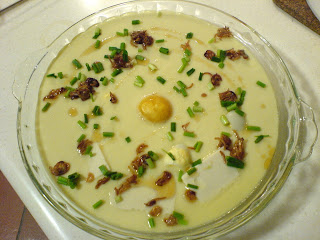
Ingredients:
3 Eggs
200ml water
100ml Chicken stock (I use the liquid Knorr Chicken stock from the box.)
1 tsp Hua Tiao cooking wine
Pepper and salt to taste
6 Quails' Eggs, hardboiled and shelled
1 box Silken Toufu
1 Salted egg yolk

Method:
1. Assemble the egg mix as explained above.
2. Arrange the toufu and quails' eggs as desired. You don't have to stop at 6 eggs - any number is fine. *winks* Put the salted egg yolk in the centre of the dish.
3. Cover the dish and steam for about 15 to 20 minutes on a low fire, until the egg is set.
4. Garnish with fried shallot, sesame oil and chopped spring onions. You might want to garnish with sliced fresh chilli if you like it spicy.


The list of ingredients to add to the egg is really up to the imagination. You might want to try:
  • Crabsticks
  • Button mushrooms
  • Sliced fish (like threadfins)
  • Sliced fish cakes (especially those cute Japanese patterned ones)
  • Sliced meat (marinated with a little light soy sauce for between 10 to 30 minutes)
  • Gingko nuts
  • Wolfberries
  • Broccoli
  • Carrot strips